



PRMT4
PRMT4, also known as coactivator-associated arginine methyltransferase 1 (CARM1), is a type I protein arginine methyltransferase that functions as a transcriptional coactivator and epigenetic regulator through arginine methylation of histone and non-histone substrates[1][2]. CARM1 was originally characterized by its ability to catalyze asymmetric dimethylation of histone H3 at arginine residues associated with chromatin remodeling and transcriptional activation, thereby linking arginine methylation to gene expression control[1][3]. Beyond chromatin regulation, CARM1 methylates diverse non-histone proteins involved in RNA processing, transcriptional regulation, metabolism, autophagy, and organelle dynamics, positioning the enzyme as a multifunctional regulator of cellular homeostasis[1][2][3]. Mechanistically, CARM1 participates in pathways governing transcription, mRNA splicing, RNA metabolism, cell-cycle regulation, metabolic adaptation, and NF-κB signaling, extending its biological influence beyond canonical nuclear functions[1][2][3]. In disease contexts, aberrant CARM1 expression or activity has been associated with tumorigenesis, metastasis, and therapeutic resistance across multiple cancer types, supporting its relevance as a therapeutic target and experimental biomarker[2][4][5]. Compared with other PRMT family members, CARM1 displays distinctive substrate specificity, preferentially targeting arginine residues located within proline-, glycine-, and methionine-rich sequences rather than the glycine-arginine-rich motifs favored by many related PRMTs[1][6]. Alternative splicing further distinguishes CARM1 biology, as full-length and exon 15-deficient isoforms exhibit different subcellular localization patterns and cancer-associated functions[1][3]. For experimental applications, selective CARM1 inhibitors, including EZM2302 and TP-064, have enabled pharmacological interrogation of CARM1-dependent pathways, although emerging evidence indicates that catalytic inhibition may not fully suppress nonenzymatic scaffolding functions of the protein[1][5].
References:
- [1]. Cho H, et al. Beta-lactam antibiotics induce a lethal malfunctioning of the bacterial cell wall synthesis machinery. Cell. 2014 Dec 4;159(6):1300-11.
- [2]. Xie Z, et al. The emerging role of CARM1 in cancer. Cell Oncol (Dordr). 2024 Oct;47(5):1503-1522. [Content Brief]
- [3]. Suresh S, et al. CARM1/PRMT4: Making Its Mark beyond Its Function as a Transcriptional Coactivator. Trends Cell Biol. 2021 May;31(5):402-417. [Content Brief]
- [4]. Huang J, et al. PRMT3 and CARM1: Emerging Epigenetic Targets in Cancer. J Cell Mol Med. 2025 Feb;29(4):e70386. [Content Brief]
- [5]. Li S, et al. Small-Molecule Modulators Targeting Coactivator-Associated Arginine Methyltransferase 1 (CARM1) as Therapeutic Agents for Cancer Treatment: Current Medicinal Chemistry Insights and Emerging Opportunities. J Med Chem. 2025 Mar 13;68(5):5024-5054. [Content Brief]
- [6]. Xu X, et al. Engineered miniature CRISPR-Cas system for mammalian genome regulation and editing. Mol Cell. 2021 Oct 21;81(20):4333-4345.e4. [Content Brief]
All Product Categories
-
PRMT4 Related Products (19)
Related Products (19)

- 1
-
GSK3368715 dihydrochloride
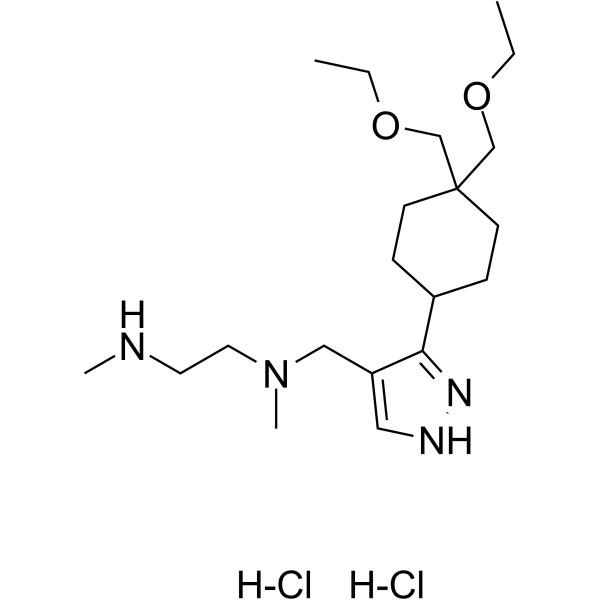 0 ImagesSynonyms: EPZ019997 dihydrochlorideGSK3368715 dihydrochloride (EPZ019997 dihydrochloride) is an orally active, reversible, and S-adenosyl-L-methionine (SAM) uncompetitive type I protein arginine methyltransferases (PRMTs) inhibitor (IC50=3.1 nM (PRMT1), 48 nM (PRMT3), 1148 nM (PRMT4), 5.7 nM (PRMT6), 1.7 nM (PRMT8)). GSK3368715 dihydrochloride (EPZ019997 dihydrochloride) produces a shift in arginine methylation states, alters exon usage, and has strong anti-cancer activity.
-
TP-064
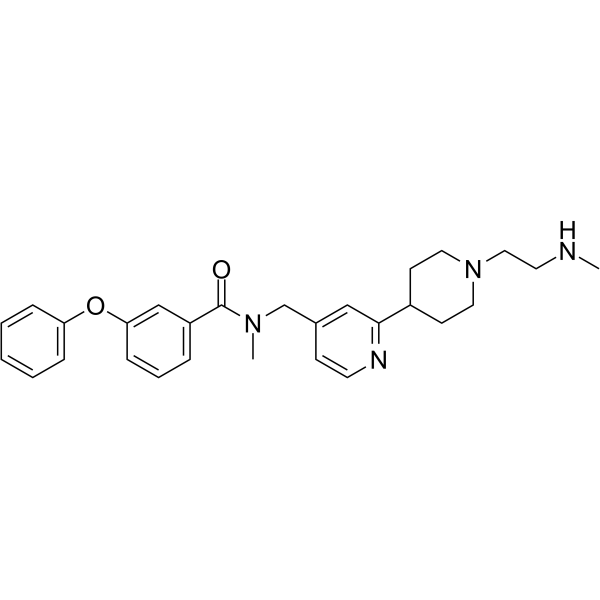 0 ImagesTP-064, a chemical probe, is a potent and selective proteinarginine methyltransferase 4 (PRMT4; CARM1) inhibitor (IC50 <10 nM). TP-064 inhibits dimethylation of BAF155 (IC50 of 340 nM) and MED12 (IC50 of 43 nM). TP-064 is inactive against the other family members except for PRMT6 (IC50 of 1.3 μM). TP-064 has anticancer activities.
-
GSK3368715
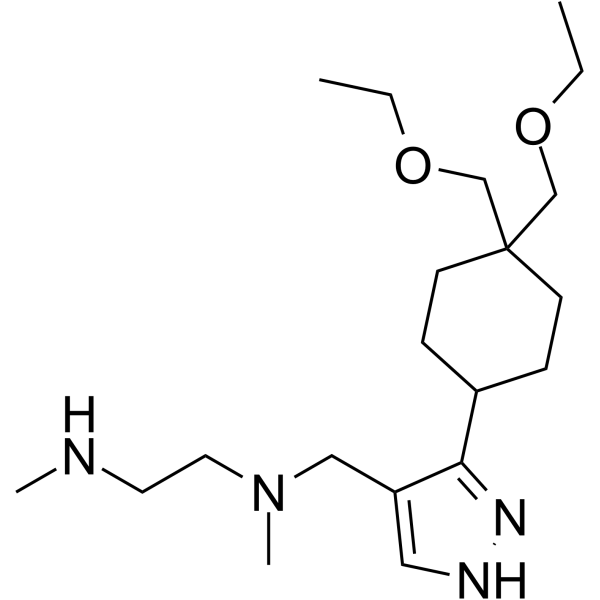 0 ImagesSynonyms: EPZ019997GSK3368715 (EPZ019997) is an orally active, reversible, and S-adenosyl-L-methionine (SAM) uncompetitive type I protein arginine methyltransferases (PRMTs) inhibitor (IC50=3.1 nM (PRMT1), 48 nM (PRMT3), 1148 nM (PRMT4), 5.7 nM (PRMT6), 1.7 nM (PRMT8)). GSK3368715 (EPZ019997) produces a shift in arginine methylation states, alters exon usage, and has strong anti-cancer activity.
-
MS4322
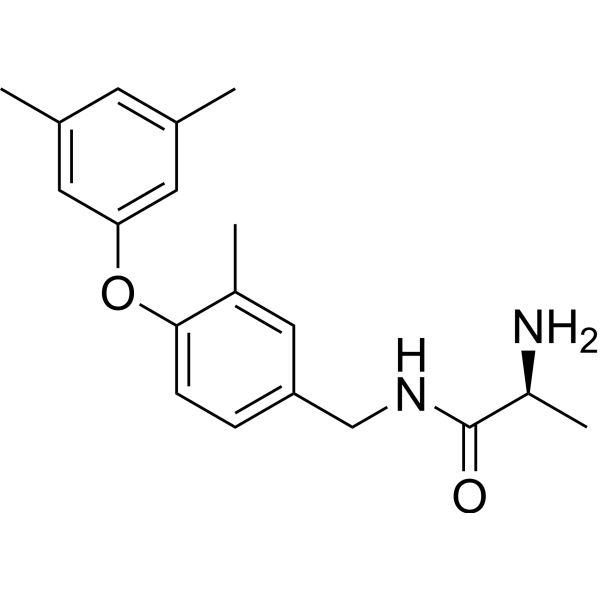
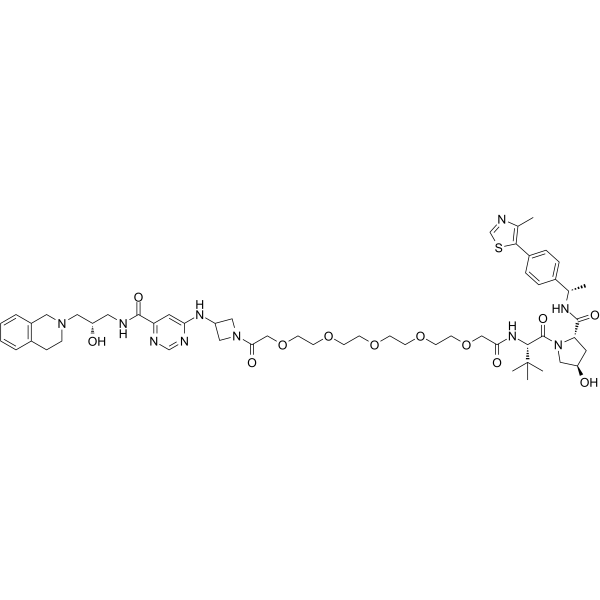 0 ImagesSynonyms: YS43-22MS4322 (YS43-22) is a specific PRMT5 PROTAC degrader. MS4322 reduces the PRMT5 protein level with a DC50 of 1.1 μM in MCF-7 cells. MS4322 inhibits the methyltransferase activity of PRMT5 with an IC50 of 18 nM. MS4322 promotes ubiquitination and degradation of PRMT5. MS4322 can be used for the research of breast cancer, lung cancer, and hepatocellular cancer. (Pink: PRMT5 ligand (HY-173092); Blue: E3 ligase ligand HY-112078); Black: linker (HY-124780); E3+linker (HY-173093 )).
-
PROTAC CARM1 degrader-1 hydrochloride
 0 ImagesCat. No.: HY-156152APurity: 99.94%PROTAC CARM1 degrader-1 hydrochloride is a highly selective CARM1 PROTAC degrader, with a DC50 of 8.1 nM in MCF‑7 cells. PROTAC CARM1 degrader-1 hydrochloride recruits the VHL E3 ubiquitin ligase complex to act on CARM1, inducing a proteasome-dependent degradation process. PROTAC CARM1 degrader-1 hydrochloride downregulates the methylation level of CARM1 substrates in breast cancer cells, inhibits breast cancer cell migration, and exhibits no significant inhibitory effect on cell proliferation. PROTAC CARM1 degrader-1 hydrochloride is applicable for related research on breast cancer.
-
CM112
 0 ImagesCat. No.: HY-172769CM112 is a hydrophobic tag-based PRMT1 degrader (DC50 = 0.83 μM) with pan-inhibitory activity against type I PRMTs. CM112 induces proteasome-dependent degradation of PRMT1, inhibits the methyltransferase activities of PRMT1, PRMT3, PRMT4 and PRMT6, downregulates the stability of orphan receptor TR3, thereby interfering with the non-enzymatic scaffolding function of PRMT1. CM112 suppresses clonogenicity and proliferation of tumor cells. CM112 is applicable to research related to breast cancer and non-small cell lung cancer.
-
AK442
 0 ImagesCat. No.: HY-183653CAS No.: 3062376-05-7AK442 is a selective PRMT4 (CARM1) inhibitor with an IC50 of 2.6 nM against human targets. AK442 is applicable to breast cancer-related research.
-
CARM1-IN-1
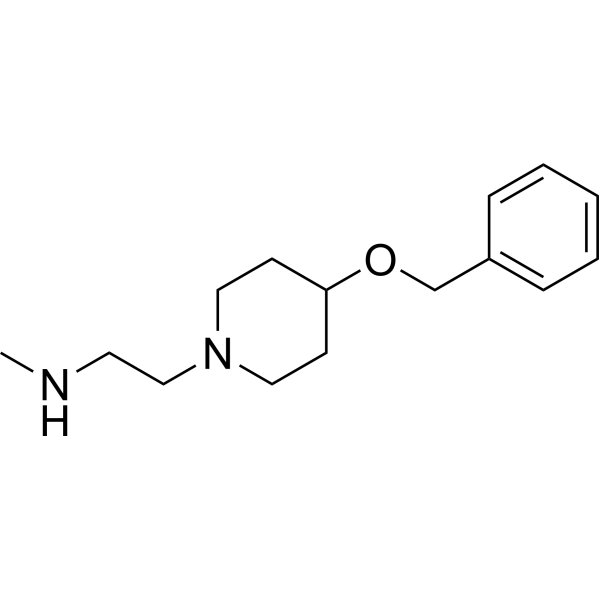
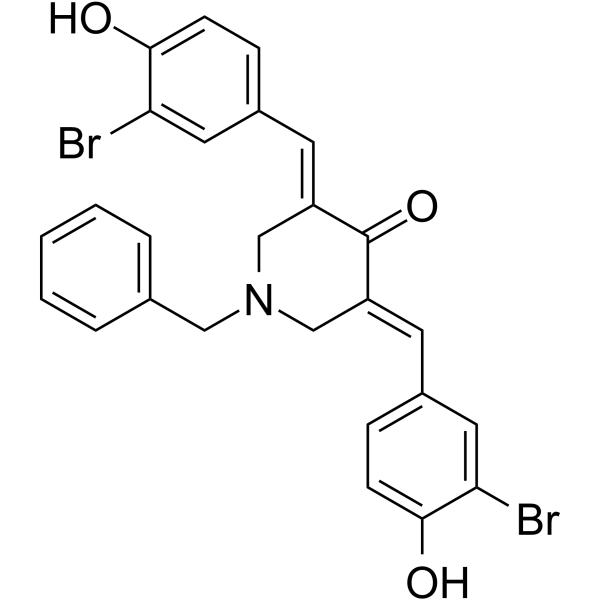 0 ImagesCat. No.: HY-12759CAS No.: 1020399-49-8CARM1-IN-1 (compound 7g) is a highly potent and selective inhibitor of CARM1 (IC50=8.6 μM, CARM1/PABP1), with low inhibitory activity against PRMT1 and SET7 (IC50 >667 μM). CARM1-IN-1 inhibits the methylation activity of CARM1 and the methylation levels of different substrates, such as PABP1, CA150, SmB, and H3. CARM1-IN-1 also inhibits the promoter activity of prostate-specific antigen (PSA) without significant cytotoxicity.
-
CARM1-IN-1 hydrochloride
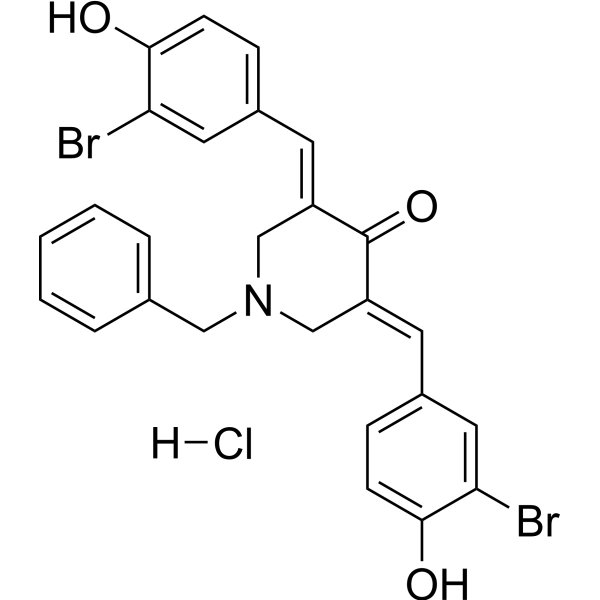 0 ImagesCat. No.: HY-12759ACAS No.: 2070018-31-2CARM1-IN-1 (compound 7g) hydrochloride is a highly potent and selective inhibitor of CARM1 (IC50=8.6 μM, CARM1/PABP1), with low inhibitory activity against PRMT1 and SET7 (IC50 >667 μM). CARM1-IN-1 hydrochloride inhibits the methylation activity of CARM1 and the methylation levels of different substrates, such as PABP1, CA150, SmB, and H3. CARM1-IN-1 hydrochloride also inhibits the promoter activity of prostate-specific antigen (PSA) without significant cytotoxicity.
-
MS4322 (isomer)
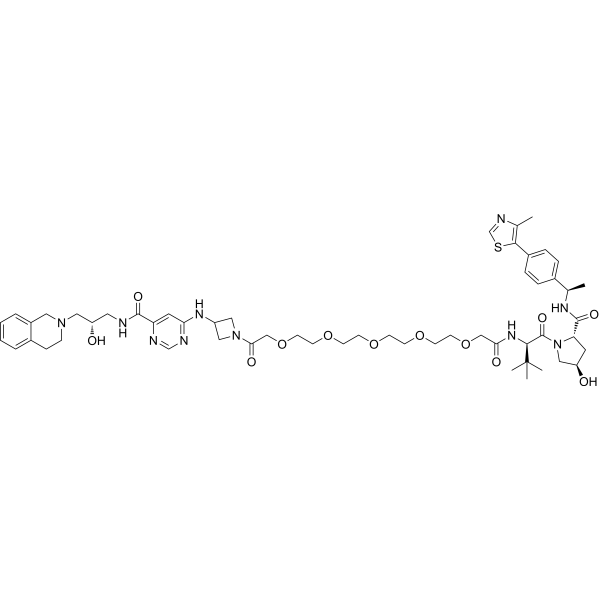 0 ImagesSynonyms: YS43-22 (isomer)MS4322 (YS43-22) isomer is an isomer of MS4322. MS4322 is a specific PRMT5 PROTAC degrader. MS4322 reduces the PRMT5 protein level with a DC50 of 1.1 μM in MCF-7 cells. MS4322 inhibits the methyltransferase activity of PRMT5 with an IC50 of 18 nM. MS4322 promotes ubiquitination and degradation of PRMT5. MS4322 can be used for the research of breast cancer, lung cancer, and hepatocellular cancer.
-
GSK3368715 trihydrochloride
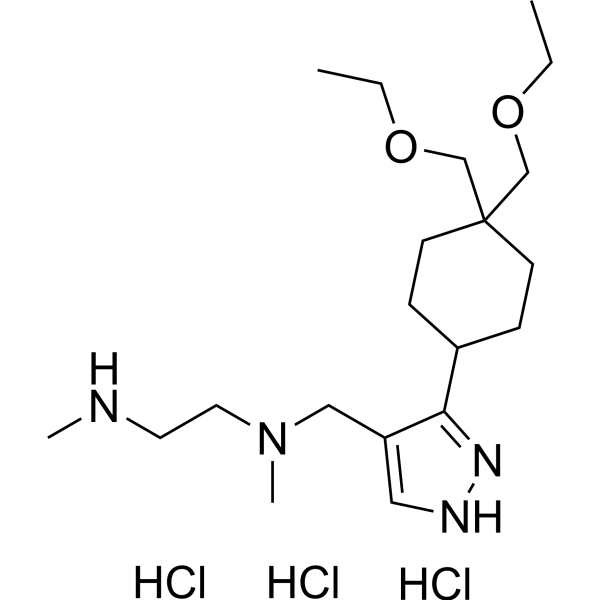 0 ImagesCat. No.: HY-128717BCAS No.: 2227587-26-8Synonyms: EPZ019997 trihydrochlorideGSK3368715 trihydrochloride (EPZ019997) is an orally active, reversible, and S-adenosyl-L-methionine (SAM) uncompetitive type I protein arginine methyltransferases (PRMTs) inhibitor (IC50=3.1 nM (PRMT1), 48 nM (PRMT3), 1148 nM (PRMT4), 5.7 nM (PRMT6), 1.7 nM (PRMT8)). GSK3368715 trihydrochloride (EPZ019997) produces a shift in arginine methylation states, alters exon usage, and has strong anti-cancer activity.
-
PRMT4-IN-1
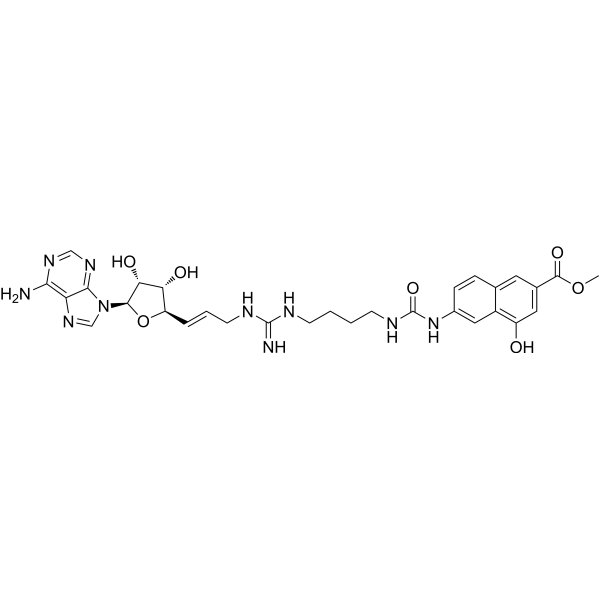 0 ImagesCat. No.: HY-146810CAS No.: 3035425-70-5PRMT4-IN-1 is a selective inhibitor of PRMT4 (IC50=3.2 nM). PRMT4-IN-1 inhibits MCF7 relative viability.
-
PRMT5-IN-19
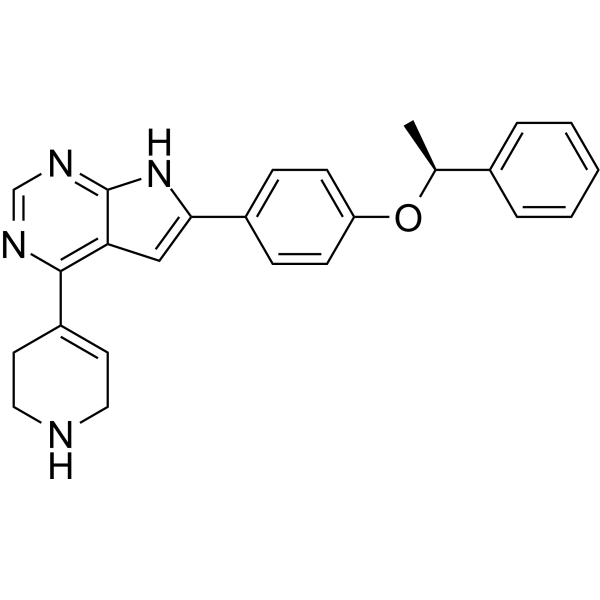 0 ImagesCat. No.: HY-149005CAS No.: 2783961-86-2PRMT5-IN-19 (Compound 41) is an selective orally active non-nucleoside PRMT5 inhibitor with IC50 values of 23.9 nM (radioactive biochemical assay) and 47 nM (AlphaLISA assay). PRMT5-IN-19 can occupy the SAM-binding pocket in PRMT5 and block methyltransferase activity, which displays good selectivity over other PRMTs and PKMTs. PRMT5-IN-19 inhibits cell proliferation by inducing cell apoptosis, and can be used for cancer-related research.
-
PRMT1-IN-3
 0 ImagesCat. No.: HY-175821CAS No.: 892570-48-8PRMT1-IN-3 is a potent protein arginine methyltransferase 1 (PRMT1) inhibitor with an IC50 of 4.11 μM. PRMT1-IN-3 inhibits PRMT6 and PRMT8 with IC50s of 23.3 and 30.1 μM. PRMT1-IN-3 suppresses asymmetric dimethylarginine (ADMA) levels and histone H4R3me2a modification in triple-negative breast cancer (TNBC) cells. PRMT1-IN-3 induces cell cycle arrest, apoptosis, and inhibits migration and colony formation in MDA-MB-231 cells. PRMT1-IN-3 acts as chemotherapeutic sensitizers for Paclitaxel (HY-B0015). PRMT1-IN-3 can be used for the study of TNBC.
-
MS3-123
 0 ImagesCat. No.: HY-184653MS3-123 is an orally active PRMT1 inhibitor (IC50 = 11.4 nM) that selectively targets the unique Cys119 residue within the SAM-binding pocket. MS3-123 covalently binds to PRMT1 through a time-dependent irreversible mechanism and exhibits high selectivity over other PRMT family members and other methyltransferases. MS3-123 inhibits breast cancer cell proliferation, migration and invasion, and induces cell cycle arrest and apoptosis. MS3-123 is useful for breast cancer research.
-
PROTAC CARM1 degrader-1
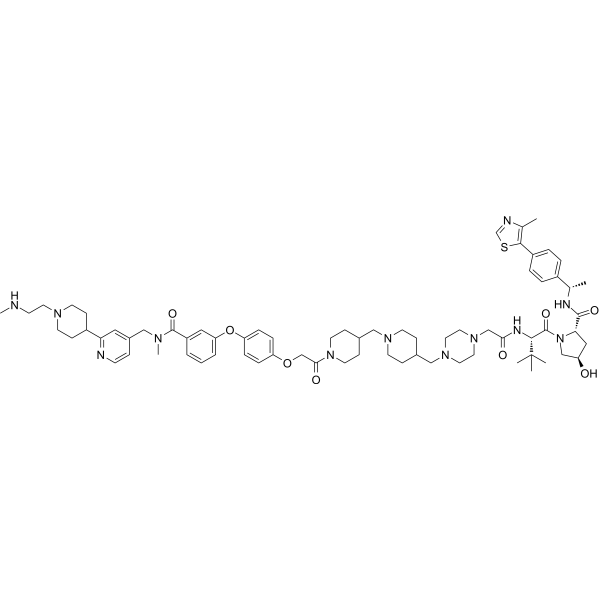 0 ImagesCat. No.: HY-156152CAS No.: 3032785-00-2PROTAC CARM1 degrader-1 is a highly selective CARM1 PROTAC degrader, with a DC50 of 8.1 nM in MCF‑7 cells. PROTAC CARM1 degrader-1 recruits the VHL E3 ubiquitin ligase complex to act on CARM1, inducing a proteasome-dependent degradation process. PROTAC CARM1 degrader-1 downregulates the methylation level of CARM1 substrates in breast cancer cells, inhibits breast cancer cell migration, and exhibits no significant inhibitory effect on cell proliferation. PROTAC CARM1 degrader-1 is applicable for related research on breast cancer.
-
C199
 0 ImagesCat. No.: HY-174445CAS No.: 3107801-96-4C199 is a PROTAC degrader targeting PRMT4 (DC50 = 106 nM). C199 shows high selectivity for PRMT4 over other protein arginile methyltransferases. C199 exhibits strong cell degradation ability. C199 induces apoptosis in MM cell lines. C199 efficiently clears PRMT4 protein via the VHL-proteasome pathway. C199 has a relatively long half-life and shows strong anti-multiple myeloma (MM) tumor activity.
- 1



